5G’s false start is over and the iPhone SE proves it
My first big assignment looked like an absolute peach — fly to the gorgeous Hawaiian island of Maui, sip cool drinks on the sand (The Nteltech paid for my trip; we don’t accept junkets), and become one of the first journalists to experience blazing 5G speeds at a Qualcomm event. Instead, I found myself exposing a lie. The first real-world 5G test turned out to be a dud, the speeds misleading at best, covering up the fact Verizon and AT&T’s millimeter-wave (mmWave) 5G wasn’t ready.
But it now seems the millimeter-wave 5G carriers have been slinging from the start was just a gigantic head fake — a way to stay in the game until their actually useful 5G spectrum was ready.
On Tuesday, Apple announced the 2022 iPhone SE, the first 5G iPhone for the United States that lacks the millimeter-wave 5G that AT&T and especially Verizon have doggedly insisted on for years. Instead of rejecting that iPhone or insisting that Apple make a special version for its millimeter-wave network, Verizon will simply… carry it. Verizon spokesperson George Koroneos confirmed to The Verge that the company will stock it in stores.
FEATURED FROM THE Nteltech
You can now run Windows 10 on the Steam Deck, with some limits
The Steam Deck launched without official support for Windows, but the moment has finally arrived if you’re one of the lucky few who have one in your hands. As spotted by The Verge, it’s now possible to install Windows 10 on the Nintendo Switch-like portable gaming console, and it’ll work without any big issues.
Valve has an official support page for running Windows on the Steam Deck, which explains how Microsoft’s operating system works on the device. Now that Wi-Fi, GPU, and Bluetooth drivers are available through the page, you can install Windows 10 in place of SteamOS. However, it’s important to note that Dual-Boot is not supported, and if you opt to run Windows, you’ll have to wipe your Steam Deck. A separate support page provides instructions on how to do that.
This is because while Steam Deck is fully capable of dual-boot, the SteamOS installer that provides a dual-boot wizard isn’t ready yet. Valve says support will ship alongside SteamOS 3 once it’s complete. Some other notes with running Windows on the Steam Deck involve the speakers and headphone jack not working. As The Verge notes, you’ll have to use Bluetooth or USB-C audio to enjoy your games properly with Windows.
If you’re hoping to upgrade your Steam Deck to Windows 11, then there’s more bad news. Valve is still preparing a BIOS update that will enable fTPM, which is needed to install Windows 11. You can stay tuned to this support page for more information on when that becomes possible.
In other news, Microsoft did provide an update on which Xbox Game Studios games will work on the Steam Deck. You should expect most titles to work fine. However, Gears 5, Halo: The Master Chief Collection, Halo Infinite, and Microsoft Flight Simulator won’t run for anti-cheat reasons
Why am I making such a big deal about something so normal? You need to understand that things have not been normal in Verizon-land. Verizon pushed Google to create a version of its budget Pixel 4A 5G that cost $100 more to satisfy the carrier’s ridiculous demand that phones support barely-there millimeter wave. The Verizon version of Samsung’s Galaxy S20 had less RAM and no microSD expansion so they could fit mmWave 5G. All of Apple’s high-end iPhones have had tiny picture windows for millimeter wave if you buy them in the United States, and for what? Personally, I’ve experienced a Verizon mmWave 5G signal with my iPhone mini a total of once.
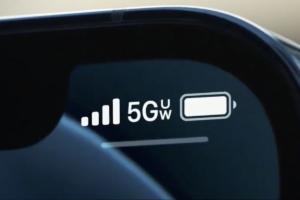
Those are just the big tech companies: to my knowledge, every other smartphone manufacturer that sells phones in the US has been co-opted into producingexclusive “5G UW” phones for Verizon as well, which has until now meant mmWave. It’s been such a hard rule that when analyst Anshel Sag spotted the phone’s spec sheet, he immediately raised the possibility that Verizon might not carry the new iPhone SE at all.
And yet, it will — because Verizon doesn’t need to pretend it cares about millimeter wave anymore. In fact, the company’s already rebranded away from it.
Originally, cellular industry executives told me that millimeter wave was key because 5G needed to wow people with speed. But the joke since day one has been that it’s a scavenger hunt: fast when you find the one street corner where it works, but walk down the street or enter a building, and the signal evaporates.
5G Ultra Wideband is Verizon’s highest performing 5G. Our 5G Ultra Wideband network uses high band (mmWave) spectrum to deliver a top-of-the-line 5G experience.
5G Ultra Wideband is Verizon’s highest performing 5G. Our 5G Ultra Wideband network uses high band (mmWave) and mid-band (C-band) spectrum to deliver a top-of-the-line 5G experience.
Funny, that.
But now that Verizon has reoriented its network around C-band — and invested heavily, $45.4 billion just for the spectrum alone — it has no more reason to push millimeter-wave devices that barely deliver on 5G’s promise. What it needs is for people’s first 5G phone to actually give them a good 5G experience, and that’s exactly what the new iPhone SE is poised to do: those who upgrade from a previous model have the opportunity to go straight from LTE to C-band 5G. It’s one of the first major phones to support C-band out of the box.
I don’t think we’ve seen the end of 5G marketing bullshit, mind you: you may wonder for a long time to come whether you’re actually on Verizon’s C-band or millimeter-wave spectrum because of how the carrier now puts both of them under the same umbrella. There’s still plenty of room for AT&T-esque labeling shenanigans in areas where coverage isn’t as good as a carrier would like it to look, too. That’s been AT&T’s version of the fake-it-until-you-make-it strategy from the start.
But at least we can stop pretending that barely-there millimeter wave is the future. It only took three years, countless billions of dollars, an entirely different chunk of spectrum, and a lot of misdirection to make 5G a consumer reality — at least in densely populated cities and parts of cities around the country.